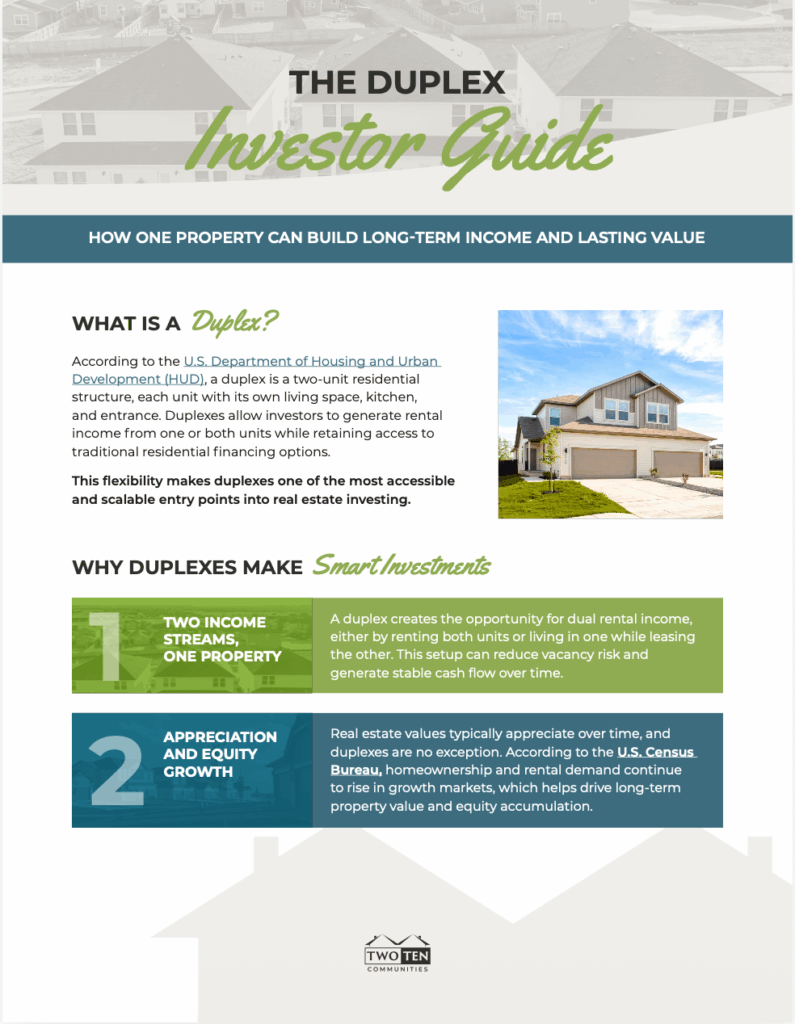
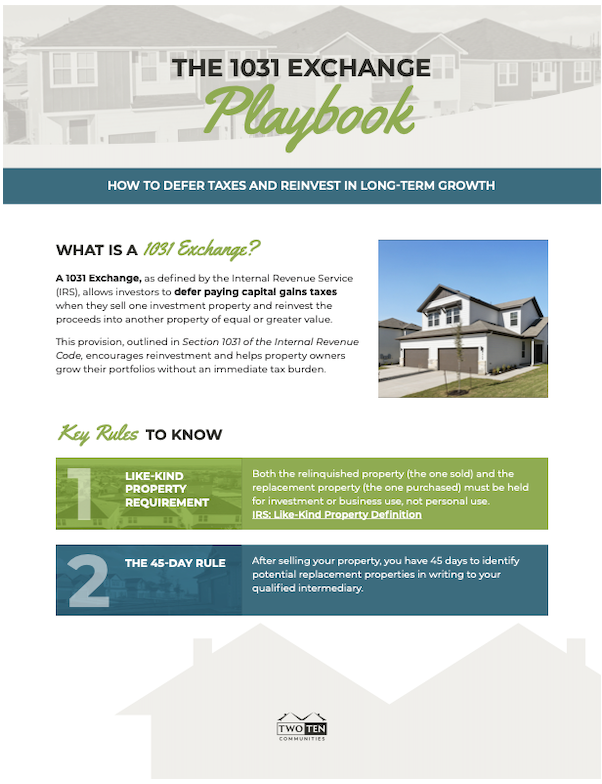
Portfolio growth does not always call for a larger acquisition. An investor may have capital to deploy but want to preserve flexibility around the next purchase, avoid concentrating too much equity in one asset or enter a market gradually. In those circumstances, the size of each acquisition becomes part of the strategy.
Duplexes offer a way to add income-producing units in smaller increments while retaining access to residential financing and potential resale demand from both investors and owner-occupants. Their investment value comes from how those features support capital allocation, ownership timing and future decisions across the portfolio.
Keep Capital Available Between Purchases
A duplex can let an investor expand without making the entire available capital pool dependent on one larger transaction. Buying in stages creates room to reassess financing, rental demand and competing opportunities between purchases.
That flexibility has financial value when acquisition conditions vary. Capital retained after one purchase can fund a later opportunity, strengthen reserves elsewhere in the portfolio or remain uncommitted until pricing improves. The comparison should account for transaction costs across several purchases, since smaller acquisitions do not automatically produce lower costs per unit.
For an investor evaluating whether duplexes are a good investment, this makes acquisition size relevant beyond affordability. It affects how much of the portfolio’s next phase must be decided at once and how much remains open to adjustment.
Determine What Financing Incentives Actually Save
A property can reach an income target through strong operating performance, favorable financing or a larger equity contribution. Those routes can produce similar distributions while leaving the investor with different returns on cash invested.
Comparing duplex opportunities under consistent operating assumptions helps reveal where the advantage originates. If one requires more equity to produce comparable income, the additional commitment should be supported by something valuable to the investor, such as stronger demand, more suitable debt terms or a better expected exit.
This also changes how financing incentives are evaluated. A lower borrowing cost may support the required income with less equity committed, but its contribution depends on the purchase price and upfront charges. The relevant result is the property’s return on the full capital commitment over the hold.
Choose Mortgage Terms That Fit Your Expected Hold
Duplexes can qualify for residential mortgage programs, creating opportunities to evaluate long-term amortization and different rate structures. The terms available depend on the borrower, property and intended occupancy, so their strategic value needs to be assessed through actual quotes.
A financing structure that aligns with the hold can reduce the need to revisit the debt at an inconvenient point. With an ARM, the initial period may fit the expected timeline, but a delayed exit requires analysis under the adjustment terms. A long amortization period and a long fixed-rate period are separate features.
The cost of financing over the ownership period also includes the balance remaining at sale. Comparing cumulative distributions with projected exit equity helps distinguish a financing option that improves early income from one that supports the stronger overall return.
Identify Which Duplex Opportunities Fit Your Goals
The same duplex can serve different purposes depending on the investor’s existing holdings and next objective. Its usefulness becomes clearer when the acquisition is evaluated against that objective rather than a universal return threshold.
| Portfolio objective | Opportunity a duplex can offer | What establishes its value |
| Expand in stages | Add units without committing to a larger property immediately. | Capital remaining after closing and reserves, relative to future acquisition plans. |
| Establish exposure to a new corridor | Commit capital at a smaller asset scale before expanding further. | Local leasing evidence and whether the purchase broadens existing market exposure. |
| Maintain flexibility over the hold | Evaluate continued ownership or a sale to different potential buyer groups. | Sustainable debt terms and evidence of whole-property resale demand. |
| Reallocate capital selectively | Potentially sell one property while retaining other separately financed holdings. | Loan provisions, ownership structure and net proceeds after sale costs and taxes. |
These opportunities are strongest when the financing preserves the intended flexibility. Cross-collateralization or other loan restrictions can change how independently an asset can be sold or refinanced, so portfolio structure belongs in the acquisition review.
Apply Local Leasing Data to Your Next Investment
Adding another property in a familiar market can improve the quality of acquisition assumptions. Existing leasing results may provide useful evidence about effective rents, concessions and the renter preferences that influence demand.
That knowledge becomes more valuable when it helps distinguish one corridor or product from another. Two communities within the same metro may compete with different inventory or serve different employment locations. Reviewing long-term demand at that level can support a more selective expansion strategy.
Familiarity also needs to be considered alongside concentration. Another duplex may deepen exposure to conditions already affecting existing holdings. The opportunity is to use local evidence to choose deliberately where the portfolio grows.
Account for Leasing Time Between Acquisitions
For an investor purchasing in stages, uncertainty about delivery can affect when capital becomes available for the next decision. A completed, rent-ready property provides a defined starting point for leasing and a more concrete basis for estimating the initial ownership period.
The first-year return still depends on absorption, concessions and carrying costs. However, those assumptions can be assessed against the property’s delivered condition and current competing inventory, allowing the investor to distinguish the acquisition’s initial capital needs from its stabilized performance.
This can be useful when coordinating several purchases. A clearer view of the first property’s leasing progress helps inform the timing of the next commitment without treating projected stabilized income as immediately available cash.
Evaluate Demand From Investors and Owner-Occupants
A duplex may appeal to investors evaluating income and owner-occupants considering the property’s residential use. That creates potential routes to sale beyond a buyer assessing the asset solely through rental performance.
The value of that flexibility depends on actual local transactions. An owner-occupant premium should not be assumed, and appreciation should remain separate from the return supported by current operations. Relevant whole-property sales can establish whether different buyer groups are active and what they are paying for comparable homes.
For investors holding several separately financed properties, individual sales may also support gradual capital reallocation. The decision can reflect each asset’s performance and market conditions, subject to financing restrictions, rather than requiring the entire portfolio to exit together.
Make Duplexes Part of Your Investment Strategy
The duplex investment case extends beyond the income from two units. Smaller acquisition increments, residential financing options and potential resale flexibility can give investors more control over how capital enters and eventually leaves a portfolio.
Those features become valuable when the property supports an acceptable return while preserving choices about what comes next. TwoTen Communities develops completed, rent-ready duplexes across Central Texas. Review available communities and contact our team for current pricing and property details to evaluate against your capital allocation and expansion plans.