For an investor already planning another acquisition, year-end timing can influence how much of the return becomes available sooner. A duplex placed in service before December 31 may generate accelerated depreciation deductions that offset eligible 2026 income, preserving capital that would otherwise go toward taxes.
The opportunity is strongest when the acquisition and the investor’s tax position align. Evaluating duplex bonus depreciation means connecting the property’s qualifying components with income the deduction can offset, then measuring the benefit across the intended hold. That can make timing a meaningful part of the purchase decision without making the tax deduction responsible for the investment’s performance.
A Permanent Provision Creates a Timing Decision
The One Big Beautiful Bill Act restored permanent 100% bonus depreciation for eligible property acquired after January 19, 2025. For a qualifying duplex acquisition, shorter-life components identified through cost segregation may be deducted in full in the year they enter service.
December 31 is the boundary for bringing those deductions into the 2026 calendar tax year. The provision continues beyond that date, so the opportunity involves matching deductions with this year’s eligible income.
That creates a useful comparison for investors deciding between a late-2026 purchase and one in 2027. Earlier tax savings may provide additional liquidity for reserves or another acquisition. Their value depends on when the deduction can actually be used and whether moving the purchase forward introduces costs that absorb the timing benefit.
The Allocation Determines the Opportunity
Cost segregation separates qualifying shorter-life assets from the residential building’s usual 27.5-year depreciation schedule. Eligible components such as appliances, flooring, fencing, and driveways to name a few, with recovery periods of twenty years or less may qualify for 100% bonus depreciation; land and the building’s structural components do not qualify through that reclassification. TwoTen Communities can provide a cost breakdown for each duplex to speed the study by your CPA.
For an acquisition model, the useful figure is the supported allocation for the specific property. A percentage estimated for another duplex may reflect different construction costs, site improvements or land values. Applying it unchanged can overstate the deduction before the investor has assessed its usability.
The comparison should also measure the additional deduction created by acceleration against the depreciation otherwise available. Treating the entire first-year deduction as an incremental benefit can overstate what the strategy adds. Study fees and related tax-preparation costs then belong alongside the estimated tax savings.
Match the Deduction to the Income
An investor with profitable passive holdings may be able to use an acquisition-generated deduction differently from someone whose income comes primarily from employment. The passive activity loss rules generally restrict rental losses from offsetting nonpassive income, with exceptions that require separate qualification.
The distinction becomes particularly relevant when existing carryforwards already offset some of the investor’s passive income. Another accelerated deduction may add to suspended losses rather than release additional cash in 2026.
| Investor’s tax position | Potential role of accelerated depreciation | Point to resolve before purchase |
| Passive income remains after existing deductions | May reduce current tax on eligible passive income. | How much additional deduction can be used in 2026? |
| Existing losses already shelter passive income | May create deductions carried into future years. | When is additional income expected to make those losses usable? |
| Income is primarily nonpassive | Current use depends on applicable exceptions and limitations. | Does the investor qualify to use rental losses against that income? |
A CPA can establish the usable amount after considering passive-loss, at-risk and other applicable limitations. That estimate gives the acquisition analysis a more reliable tax benefit than the deduction amount alone.
Rental Availability Establishes the Year
The property must be ready and available for rental use by December 31 to be placed in service in 2026. A tenant does not need to have moved in, but closing alone does not establish rental availability.
For a year-end acquisition, the review should identify anything that could prevent the property from being offered for rent after closing. Completed construction provides a more defined starting point, with the remaining focus on actual availability and evidence supporting the placed-in-service date.
This separates the acquisition deadline from the leasing projection. The property may qualify as placed in service before rental payments begin, while the investment still needs sufficient liquidity for the period before occupancy.
Evaluate the Benefit Across the Hold
Accelerating depreciation changes the timing of deductions and reduces the depreciation remaining for those components in later years. Its value therefore depends partly on how useful deductions are now compared with their expected usefulness during ownership.
The exit also belongs in that comparison. Depreciation reduces adjusted basis, and gain attributable to certain components may be subject to depreciation recapture. A planned early sale can produce a different after-tax result from a longer hold that leaves the investor more time to use the capital preserved through earlier tax savings.
The analysis should compare projected after-tax cash flows under accelerated and ordinary depreciation, including study costs and sale treatment. This reveals whether the strategy improves the investment’s expected outcome rather than simply producing a larger deduction in its first year.
Coordinate the Tax Strategy With the Acquisition
A year-end duplex purchase can bring tax savings forward when qualifying components, rental availability and usable deductions align. For an investor with eligible income to offset, that can improve the timing of cash retained and strengthen the acquisition’s after-tax return.
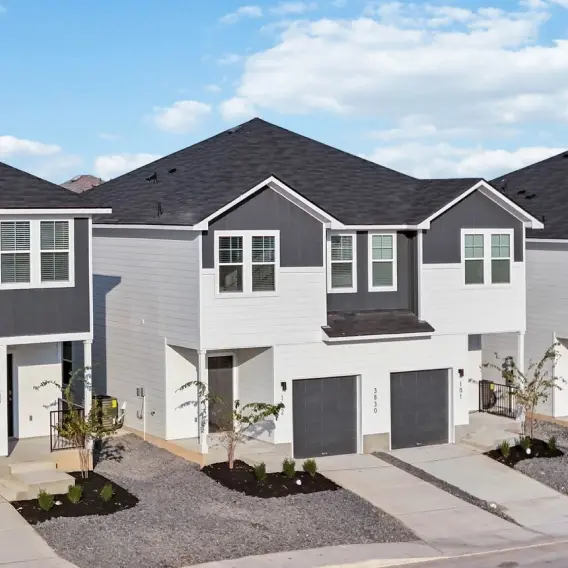
TwoTen Communities develops completed, rent-ready duplexes across Central Texas. Review available communities alongside current financing opportunities, and have your CPA assess the property-specific deduction and its use before incorporating tax savings into the purchase decision.
Contact our team for current inventory, pricing and completion details as you evaluate an acquisition for the December 31 deadline.